The Technological Background and Future of Remote Audio Production Tools
Evolution of Remote Production
Text: Rebekah Wilson Illustration: Tomasz Jogoda
Text: Rebekah Wilson Illustration: Tomasz Jogoda
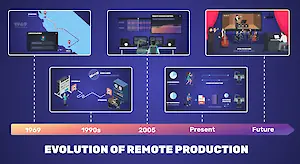
This article reviews the technical background of remote network technology, its application to audio production tools and workflows, and considers future possibilities. Remote audio production offers many professional and creative benefits, ranging from operational efficiency, environmental sustainability goals, and innovation in how we collaborate in commercial, musical, educational, and creative sectors.
Since the development of early commercial tools and their transformation into the sophisticated, full-feature workflows that we rely on today, we’ve seen innovation in reliability, predictability, and platform integration. These factors mean that commercial facilities, broadcast studios, orchestras, and other high-pace operations have embraced remote audio production into their daily workflows.
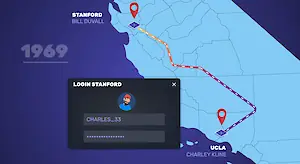
Communication is a human activity. In 1969, 50 years ago as of the writing of this text, UCLA graduate student Charley Kline sent the first digital message to Bill Duvall in Stanford, across California. That message was how ARPANET began, leading to today’s modern internet. Since then, we have seen digital communications give rise to an expanse of services built on the internet, such as the WebRTC framework that has prompted a proliferation of services for transmitting real-time high-quality media. This is possible thanks to a few key developments: codecs to compress a signal small enough yet high-quality enough; the ability to transfer that media at low enough latency for conversational purposes on a variety of systems both desktop and mobile; and the astronomical growth of public internet availability around the globe. Today, any developer can create a platform for remote audio production designed specifically for their purpose.
Modern remote production tools result from the shift made over twenty years ago from expensive, hardware-dependent solutions to flexible, software-based internet protocols. The history of remote audio technology spans over a century of evolution from analog telephone lines to high-speed digital infrastructures.
ISDN in the 80s and 90s
Before the proliferation of high-speed internet in the early 2000s, remote audio production relied on ISDN (Integrated Services Digital Network) lines. The introduction of ISDN codecs that ran on these lines created the first opportunity for remote recording at a time when travel was the only way to record in a remote studio. ISDN used circuit-switched lines, which means that data sent from one location was sent directly to another, lowering latency and packet loss. This allowed for reliable transmission. By using two lines, it was possible to send very good quality audio using AAC and MPEG II codecs.
For all the new benefits, there were several challenges:
• Hardware dependency: ISDN required dedicated physical phone lines and expensive hardware codecs.
• Studios needed to ensure a complex handshake would succeed, requiring technical knowledge and telecom support.
• Along with a monthly fixed-line fee and hardware costs, calls were charged on a per-minute rate, where the greater the distance, the higher the rate; it could cost up to 5 USD a minute for cross-ocean calls.
• While talent and stakeholders were no longer demanded to be in the studio, working remotely still demanded booking an ISDN-equipped studio or installing an ISDN line at the hotel.
Internet advancements in the early 2000s
A technological shift was possible with the rise of high-speed packet-switched networks. In a packet-switched network, data is broken down into small units called packets, each containing a portion of the original data along with the information needed to reach its destination. These packets travel across various routes through a network of routers and switches, often arriving corrupted at their destination. Each packet may take an individual route, depending on congestion and other factors. Once they reach the target device, the packets are reassembled into the original format, allowing many, many users and devices to share the same communication lines.
As the internet proliferated and DSL and cable internet became increasingly available, early adopters and developers harnessed these new developments to address the limitations of legacy ISDN systems. For example, a music ensemble at McGill University transmitted 12 channels of uncompressed PCM audio over the internet to the University of Southern California. By utilizing the rapidly expanding packet-switched internet instead of dedicated and expensive circuit-switched phone lines used in ISDN, technical and economic barriers were lowered. From this point, businesses, and homes began installing high-speed internet lines, and the natural progression of technology began. Alongside network development, the 1990s saw the evolution of low-delay, high-quality audio codecs thanks to advancements in digital signal processing and psychoacoustics.
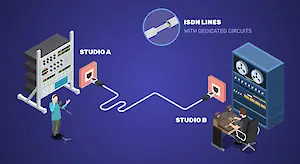
Lower costs and convenience were achieved by new designs that adapt to those new developments. The arrival of software and hardware that made use of high-speed bandwidth and low-delay codecs quickly made remote audio and media possible, opening affordable cross-country and international collaborations. For the first time, professionals began to work from home setups with standard broadband.
For all the benefits in lower cost and better accessibility, there were many initial challenges:
• Packet-switched networks allow multiple users to simultaneously and efficiently share the internet; however, they lead to congestion and overuse, particularly when service providers do not over-provision.
• Bandwidth limitations due to public internet peering leads to packet loss and jitter and additional latency due to buffering to mitigate packet loss.
• Jitter is the fluctuation of latency, latency is the time it takes a connection to complete its path, and packet loss is the loss of data due to network issues of all types.
• Unreliable bandwidth — Universities built Internet2, and many production companies use private networks to ensure bandwidth availability and reliability.
5G, Satellite, Fibre-optic
Massive funding by governments in the 2010s has led to fibre-to-the-home, where today 1 billion households have gigabit subscriptions. Commercial Starlink now offers up to 500 Mbps, and with the 5G rollout in cities offering affordable, fast, and reliable connections from 10 Mbps, remote production is possible across much of the world.
Commercial stabilization and modern mass-market tools
From the mid-2000s, as emerging software platforms were able to harness these innovations and transition the industry away from cumbersome ISDN lines and hardware codecs toward software-based workflows with more features, large companies began to invest in developing new platforms specifically for the purpose of remote collaboration. For the greater benefit, many of these developments are free and open source, such as the WebRTC and WebAudio projects. The emergence of these projects in the 2010s, along with WebSocket and WebTransport protocols, suddenly allowed anyone to create a high-quality real-time audio and video connection on desktop, browser, and mobile platforms. Commercial software quickly took advantage of these protocols to the point where the ability to transmit high-quality audio and video was no longer a business luxury — but a consumer commodity available to all.
The pandemic accelerator
In 2020, the COVID-19 pandemic significantly accelerated the development and adoption of network-based production and music creation tools for studios, institutes, musicians, ensembles, and music education, building on the protocols and lessons learned from the previous decade. Incredibly, home internet installations were of such good quality that it was a milestone achievement that an estimated 50 % of the global population had sufficient internet access to allow for reliable communications and remote working.
Key Use Cases
Today we have a true diversity of platforms. The modern era features a spectrum of tools, including artist-led platforms, open-source solutions, and mass-market commercial solutions. Remote audio production tools are used by a variety of professionals and creators.
• Remote recording of talent: Often ADR (Automated Dialogue Replacement) or recording dialog against picture or overdubbing to pre-recorded music. Requires guaranteed high-quality recording, and timeline synchronization.
• Review and approval: stakeholder session. Requires low-latency, high-quality audio and video transmission, and timeline synchronization.
• Directed/supervised sessions: may be a recording session, rehearsal, knowledge sharing, education, general communications. Requires good-enough quality communications.
Segments
• Sound Engineers: Engineers use remote audio solutions for ADR, recording, and reviewing high-quality time-based media within their existing digital workstations.
• Voice Actors: Collaborate globally without the need for travel, or while travelling and away from the studio for advertising, audiobooks, film ADR.
• Composers: These workflows enable composers to work with remote clients and collaborators while maintaining high media quality.
• Sound and picture studios: Remote solutions must meet the practical needs of those working in professional production workflows.
• Orchestras: It’s very expensive for an orchestra to travel, and still expensive for a composer to travel, especially if it’s for a short session. Remote audio allows composers, orchestras, ensembles, and music directors to work with the recording engineer and ensure their ideal session recordings go through.
• Commercial Users/Advertising: These users typically prioritize reliability, efficiency, and predictability over experimental flexibility.
• Artists and Musicians: Beyond conventional production, the platform supports artists and musicians engaged in ambitious creative experiments and international real-time sessions.
• Educators and students: High quality allows the ability to teach instruments, studio techniques, and even remote audio collaboration techniques.
• Podcasters: Most podcasters rely on remote connections to record a wide range of guests
• Broadcast: live sports broadcast, synchronization of remote streams
Why choose to work remotely?
1. Cost Reduction and Economic Resource Management
• Removing travel expenses: Remote technology allows voice actors, composers, and sound engineers to collaborate globally, significantly reducing the costs associated with travel. Networked tools allow musicians and ensembles to work together over longer durations than would be physically or financially possible if they had to meet in person. One of the successful examples are orchestras: it can be expensive for a composer to travel, let alone an orchestra. Remote tools allow composers and orchestras to work together longer hours at lower cost, resulting in higher-quality recordings.
• Enabling collaboration: Outside of economics, musicians, talent, directors, engineers, and other stakeholders and participants may not be able to travel due to many reasons such as visa difficulties, family commitments, disability, international affairs, war … Many of those who work together remotely have never met in person, yet experience friendship over time through the act of collaboration.
2. Global Collaboration and Market Access
• Access to Global Talent: Professionals can work with clients and collaborators regardless of their location, even if they are using mobile devices or are on the other side of the world.
• Scalability: As remote audio production lowers costs, facilities can grow their operations. They can also expand their services to include listening and collaboration rooms for local and remote attendees.
• Lowered Barriers to Entry: When the technical barriers are low and media quality is high, professionals are more willing to transition to remote work models and benefit from the above advantages.
3. Sustainability and Environmental Responsibility
• Reduced Carbon Footprint: Increasingly, businesses view remote production as a vital tool for reducing travel-related carbon emissions, turning sustainability into business value.
• Sustainable Participation for Global Communities: Remote audio production offers a powerful framework for sustainability by decoupling creative output from physical location. This shift moves participation in creative activities from a geographic privilege to a digital right, creating a more inclusive global creative economy.
• Managing instability: With today’s ongoing and worsening energy insecurity, governments are recommending limiting carbon-based travel where possible.
4. Professional Workflow Efficiency and Integration
• Seamless DAW Integration: Commercial platforms allow for the recording and reviewing of high-quality media directly within a user’s existing DAW.
• Predictability and Reliability: Commercial users prioritize stability and efficiency over experimental flexibility, requiring tools that offer consistent performance: rooms, talent, and sessions are expensive and cannot allow long set-up times or inefficient troubleshooting.
• Commercially Stabilized: Reliability, efficiency, integrations, and professional workflows
• Unified Platforms: Unify audio, video, and file management into a single platform, eliminating fragmented workflows and enabling seamless coordination.
When we are not at the same place, we can choose whether to work or not to work together. We may choose to travel, or not choose to travel. If we decide to work together, and not travel, then remote audio production offers two possibilities in remote audio production: to work together asynchronously or synchronously.
Asynchronous workflows
Asynchronous solutions expect that there are two or more parties interacting at different times while remote from each other. This largely depends on file sharing and transfer.
In the initially early days of the internet, asynchronous collaboration was possible by sending files between systems via a central server; even with slow speeds at the time, it opened a world of possibilities. High-speed bandwidth of fibre-optic lines allows us to experience rapid transfer times when even moving many gigabytes between countries and across continents and oceans is now standard.
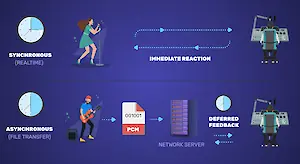
• Benefits: Users can work at their own schedule and time zones. In the commercial world, file transfer solutions largely serve as a review and approval workflow. In the music world, it also serves as a collaborative method.
• Challenges: Users must wait, download times, large file downloads. Creators don’t get immediate, initial reactions from stakeholders, thus, often missing direct critical feedback that can only happen on synchronous solutions.
Synchronous workflows
Synchronous solutions expect that there are two or more parties interacting at the same time, remote from each other. There are several challenges: the mediation of presence, where their voices and images are digitally recreated and transmitted. This means, we don’t necessarily know how accurately we are represented to our remote partners and must take care to be more communicative. It also means we are subject to latency, which is largely managed thanks to the human brain being able to accommodate for certain delays in speech. But it will interrupt how we experience working with music together, which has less tolerance for delays.
• Benefits: The key benefit of synchronous workflows is that users get and can give immediate feedback: there is an important difference between being present together, and hearing the feedback of someone who has heard the work.
• Challenges: Audio streaming introduces latency, security concerns, ear fatigue, and frustration due to the lack of standardization. Further, there is an acoustic hurdle that requires attention: high-quality microphones, and proper audio interfaces may give excellent audio quality, and a software connection can be flawless, but if a voice actor is recording in an echoey kitchen, the audio is unusable.
A statement on latency and physics
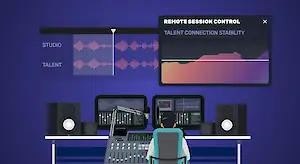
When we are remote from each other, physics dictates that the time for communications transmission increases, as we rely on the speed of light, which is not instantaneous. The time for unimpeded light from New York to London is around 20 ms; add in fibre-optic latency, transatlantic cables, routing, software and hardware processing, and this increases to a minimum of 60 milliseconds, assuming the best network conditions. These best conditions rarely exist — the packet-switched networks that we rely on for the public internet are constantly changing routes to account for congestion and outages. This means that the internet will drop and delay packets, so that we must add a jitter buffer to accommodate such delays. In effect, for a reliable audio communication stream between London and New York, a buffer at least as equal to the round-trip time (RTT) is warranted. So, the latency increases from 60 to 120 ms easily. Fortunately, human communication can accept such latencies in speech: we are constantly managing latency in our minds. These latencies, however, impede musical playing in real time between two or more remote live musicians, as really any latency beyond 20 ms gets into musical territory that affects the performance.
Solutions to address wide-area-network limitations:
• UDP protocol: Unlike standard web traffic, it uses the User Datagram Protocol (UDP), which is optimized for real-time data where speed is prioritized over ensuring every packet arrives in order. This is vital for reducing latency.
• Audio compression: Ultimately, we want to send less data, so we use codecs such as AAC-ELD and Opus, which have exceptional quality at high bitrates. It is possible to transmit PCM; however, this can more easily lead to packet loss over consumer networks.
• Management workarounds for packet loss: audio stream technology implements a few methods to accommodate for packet loss over the internet: adaptive jitter buffers, audio packet replacement via machine learning, or heuristic means.
• Synchronization: Streaming HD video can be difficult except on the most robust networks, often losing frames. Using synchronization, video, and audio timelines are heard together accurately.
Synchronization
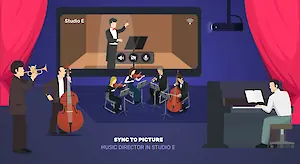
A key technical breakthrough is the harnessing of synchronization methods using SMPTE timecode or MIDI timecode, which allows two or more different DAWs located thousands of miles apart to ‘lock’ their timelines. This enables review and approval workflows, and sample-accurate overdubbing and ADR in real time, allowing actors, directors, and stakeholders to all be fully remote. Timeline synchronization workflows also mean that we get a better picture quality experience since we can use local media, and studios are ensured that their valuable video assets are not streamed over the public internet.
Data integrity and quality management
Because the public internet is inherently unstable, it is not ideal to rely on remote recordings directly without dedicated technology to accommodate for packet loss. For this reason, remote audio production tools may offer, for example, ways to record the local PCM audio at the same time and later transfer that file. Other services may include ‘resilience’ features that automatically identify the stream gaps and heal remote recordings. Sophisticated tools ultimately eliminate the need for manual file transfers and avoid the manual spotting of the new audio into the timeline, an activity that requires significant time and effort.
Data security and privacy
Major studios require strict security protocols like end-to-end encryption, multi-factor authentication, and strict NDAs for remote ADR to prevent pre-release content leaks. Modern platforms are fully enterprise compliant while supporting compatibility with smaller studios.
Multi-channel, Dolby Atmos integrations
The importance today of Dolby Atmos and MPEG-H is defined not just by sound quality, but by its ubiquity and demand by cinema, TV, music, and streaming services to submit in this format. As bandwidth and technical capabilities improve, it becomes possible to conduct full Dolby Atmos remote sessions between facilities and stakeholders with DAW and hardware support. Facilities, sound engineers, and stakeholders can collaborate on complex spatial audio sessions remotely in real-time, eliminating the need for everyone to be in the same physical studio, saving time and travel expenses while maintaining top-tier production standards.
The future holds more of what is important to audio professionals: reliability, efficiency, integrations, and specialized, dedicated workflows.
• Remote servers will become faster, cheaper, more sophisticated, and mobile; synchronization; and fewer people want to or are able to travel long distances.
• We’ll see increased bandwidth capabilities, particularly in regions that are trailing behind and do offer easy and affordable access to 5G and gigabyte fibre-optic connections.
• Mobile devices are increasingly powerful: in collaboration with higher bandwidth, more powerful devices lead to achieving 8k and higher video transmission and even lower latencies (though until we have invented time travel, physics will limit transmission times).
Immersive
• We’ll see massive increases in channels and objects
• We’re already able to send 128 channels in sync with Dolby Atmos objects and metadata. We imagine a future of thousands of channels and objects: managing their transmission and synchronization will be possible.
AI analysis
In the world of real-time media transmission, AI offers many potential improvements and benefits:
• We expect any mundane and repetitive tasks to be automated and accomplished through AI-enhanced tools and processes.
• We expect to see AI-assisted network negotiation to find the most efficient path over the wide area network, and to adjust buffers for smoother transmissions, and to automate our firewall rules for the best security.
• We expect to see new AI-assisted codecs that are even more capable of reproducing dropped packets — a task already started in some codecs. The work will continue and improve.
• We expect to see major advances in acoustic processing, to remove the room sound and undesired sounds.
• Media security is a critical feature of remote applications: we must be able to trust and verify our collaborator’s actions. AI-assisted generative security features such as visible and hidden watermarks are increasingly robust and powerful, to indicate where, to whom, and when exactly media is distributed and shared.
• AI agents to keep us informed of current connections, statistics, and telemetrics.
Hybrid processes
As bandwidth and processing power improve and as remote production teams become more standard, we’ll enjoy the full opportunities of hybrid processes, for example, multiple versions of streaming and content at the time of creation, real-time conversion to device-compatible formats, increased capacity and speed of cloud and local storage locations, increased applications of proxy media, mobile/studio integrations. We’ll experience seamless moving between synchronous and asynchronous workflows, and standardization may improve so that services have better interaction between commercial platforms.
Collaboration
On an educational level, interdepartmental interactions and knowledge sharing are increasingly critical as the modern work environment demands collaboration experience. With custom tools for music and engineering schools, students will benefit from master classes with a greater number of global experts. They will create fully remote bands and projects, assembled from members who have never met. They will enjoy music lessons with instrument integrations to better help teachers and students to improve. International and cross-country songwriting circles will become increasingly normal, where some services have already been made inroads to such successful collaborations.
For the musician and audio professional, there is a new world ahead of collaborations and interactions that wasn’t imaginable in previous centuries.
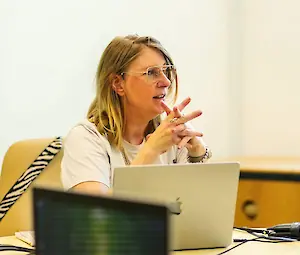
Rebekah Wilson has been developing software for the internet since the mid-90s, and in 2005, she co-founded Source Elements as Technical Director. As a provider of remote audio production services, Rebekah advocates for the benefits of remote collaboration in sound engineering, voice acting, music performance and production, film production, and education. She continues her commitment to innovation in the field of remote audio by ensuring Source Elements’ services are of exceptional quality, sophistication, and reliability, and by promoting music projects around the world that could only exist with network technology. Originally trained as a composer, Rebekah is a software developer and an expert in the fields of music technology and networking. As a New Zealand native, she deeply understands how important it is to be connected even when separated by oceans; there is no excuse for creativity to suffer just because of where we are in the world.